Podcast episodes

#43: Strengthening the joint force with mechanics-based pavement innovation

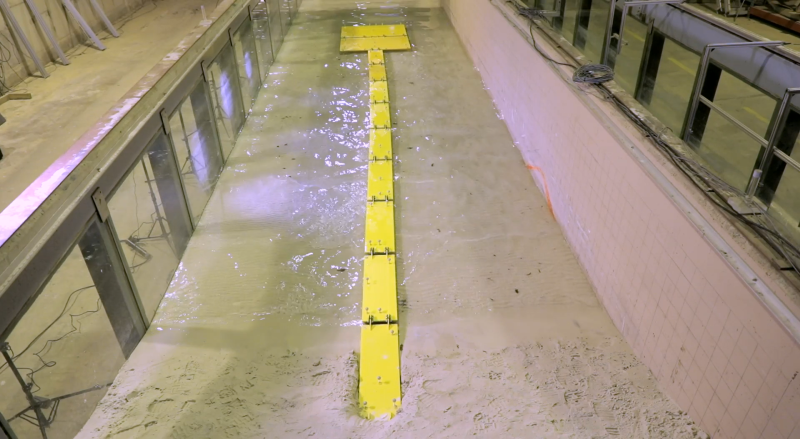
When most people think about the military being ready for the fight, they picture aircraft and vehicles, not the pavements beneath them. We talk with Dr. Jeremy Stache, a research civil engineer at ERDC’s Geotechnical and Structures Laboratory, about why pavement science is essential to military mobility and power projection. Topics include the direct connection…

Read More

#42 Constructing AI’s Future

Artificial intelligence is no longer science fiction. Today, AI is powering critical processes across the Department of War and serving as a force multiplier throughout the U.S. Army Corps of Engineers’ military and civil works portfolios. In this episode of the Power of ERDC podcast, Dr. Robert Moser, director of ERDC’s Information Technology Laboratory, discusses…

Read More

#41: Antarctic Expertise: ‘Explorer’ has helped shape, advance cold regions engineering

George Blaisdell’s career is one for the record books. His contributions to engineering in one of the world’s most inhospitable environments are legendary, but for a man with more than 30 trips to Antarctica, the work is far from over. Today’s guest is Blaisdell, a research civil engineer with ERDC’s Cold Regions Research and Engineering…

Read More

#40: Engineering at the water’s edge: Advancing capabilities through modeling, autonomy and industry partnerships

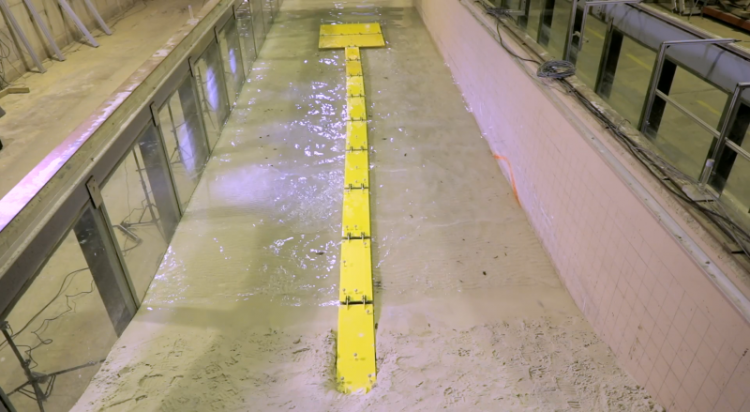
Dr. Gaurav Savant, Senior Scientific Technical Manager at the ERDC Coastal and Hydraulics Laboratory, discusses how ERDC is transforming military and civil operations through advanced modeling, AI and autonomous systems. From ensuring safe wet gap crossings for Warfighters to revolutionizing water resource management, these innovations are reshaping the future of defense and engineering. Topics include…

Read More

#39: Global Forest Modeling Toolkit: Mission-critical intelligence about vegetation around the world

Forests cover nearly a third of the Earth’s land surface and present multiple challenges to military forces. Dense trees restrict mobility, limit surveillance, impede air support and degrade communication. But not all forests are the same. To best counter these difficulties, leaders need detailed information about vegetation attributes, such as canopy cover, stem diameter and…

Read More

#38: H2Rescue: Providing Power, Water and World Records

Roughly the distance from New York to Miami – or 1,806 miles. That’s how far a vehicle, developed in part by ERDC, drove on one tank of hydrogen fuel to not only set a mark honored by the Guinness Book of World Records, but also to advance new and existing hydrogen-powered technologies. In this episode,…

Read More

#37: A Fresh (water) Runway: ERDC’s ice and snow expertise enables historic LC-130 landing

When the New York Air National Guard’s 109th Airlift Wing needed to find a suitable location to land its massive LC-130 Hercules cargo plane during an Arctic exercise in March 2025, it turned to ERDC for help. Although the nearby sea ice was not thick enough to support the maneuver, ERDC devised a plan to land…

Read More

#36: SandHound: Applying robotics to advance critical coastline survey capabilities

For several sweltering weeks along the North Carolina coastline, an ERDC teampushed a quadruped robot with a suite of advanced sensors to its limit to test its abilityto conduct critical beach landscape surveys. The research – known as the SandHound Project – is working to validate whether thequadruped can operate at all levels of the…

Read More

#35: Tech Transfer: Adding the reach to research through commercialization

ERDCWERX and ERDC’s Office of Research and Technology Transfer (ORTT) are accelerating innovation for the Warfighter and the nation. Through its collaboration with ERDCWERX, ERDC is expanding the Army’s ability to quickly adopt, adapt and deliver technologies that enhance readiness, strengthen protection, and provide dual-use solutions for both military and civilian applications. We explore how…

Read More

#34: Underwater ROV: Making aquatic infrastructure inspection safer, cost-effective

The U.S. Army Corps of Engineers (USACE) manages hundreds of locks and dams, which are critical components of a complex navigation system that is central to our nation’s economy and security. Inspecting this aging aquatic infrastructure often requires costly and dangerous processes, such as deploying divers or dewatering structures, halting the flow of goods and…

Read More