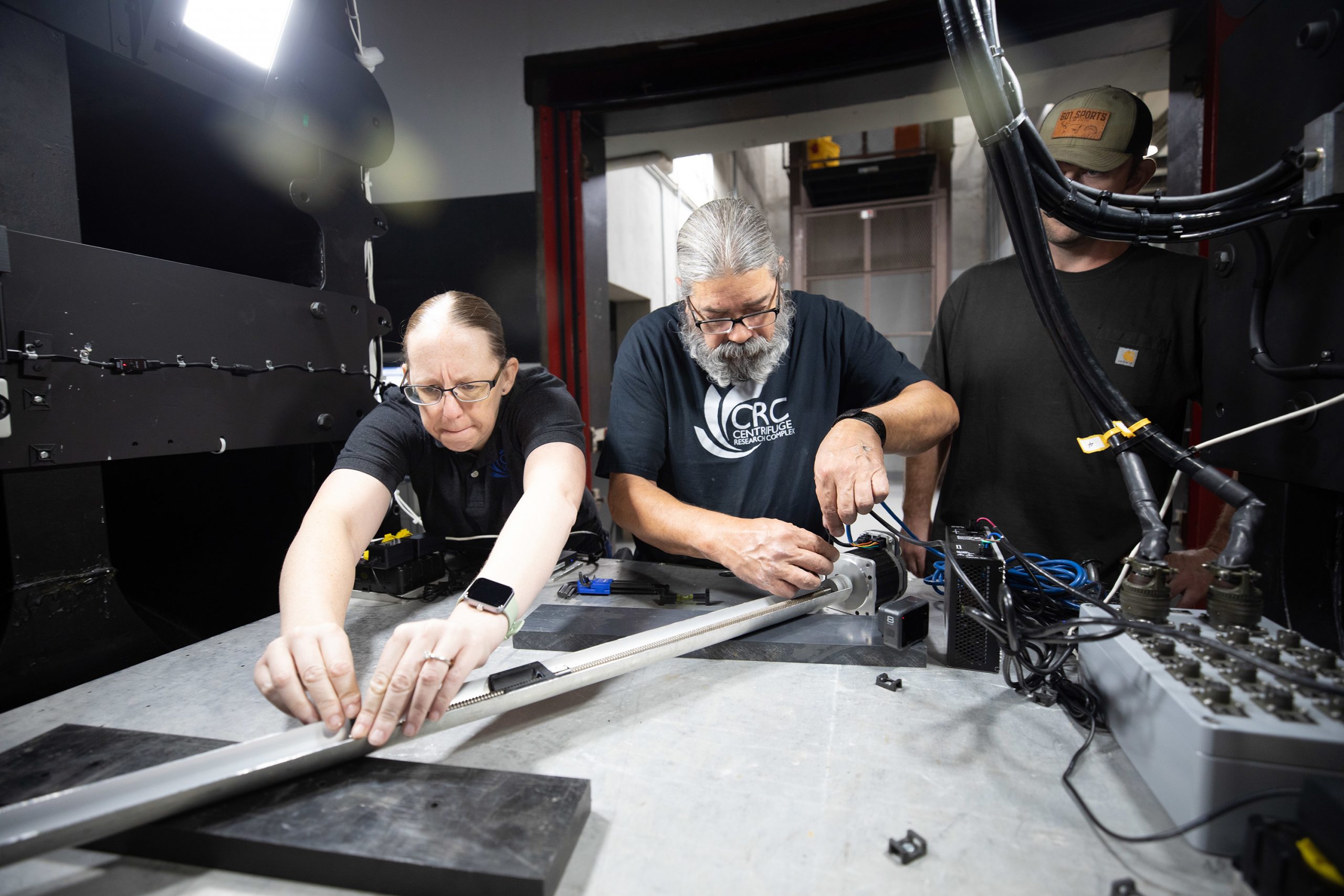
Failure is something engineers work every day to prevent, but at ERDC, researchers can study failure before it happens in the real world.
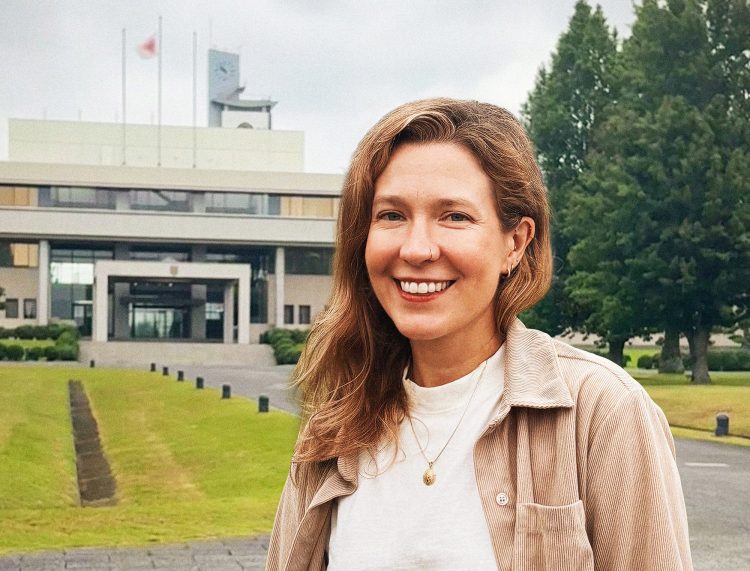
Dr. April Bowman, a research civil engineer with ERDC’s Geotechnical and Structures Laboratory, joins the Power of ERDC podcast to explain how the Centrifuge Research Complex helps scientists and engineers model large-scale infrastructure problems in miniature while recreating real-world stress conditions.
The centrifuge allows ERDC to study how soil and structures interact under load, giving researchers a safer and more cost-effective way to examine dams, levees, walls, tunnels, foundations, protective barriers and other large infrastructure systems. Bowman explains how spinning a small model at increased gravity can make it behave like a full-scale system, allowing researchers to test failure mechanisms that would be too dangerous, expensive or impractical to recreate in the field (3:40).
Topics discussed include why soil behavior depends on stress (5:34); how centrifuge testing can reduce costs while increasing the number of tests (7:17); how ERDC research has supported military protection systems (9:09) and civil works infrastructure (12:28); and how current mechanically stabilized earth wall research is using fiber optic strain sensing and acoustic sensing to detect early warning signs of failure (16:03).
For more information, visit PowerofERDCPodcast.org/71-spinning-big-science_resources. Watch a video of this podcast at PowerofERDCPodcast.org/71-spinning-big-science_video.
Podcast: Play in new window | Download

Recent Comments