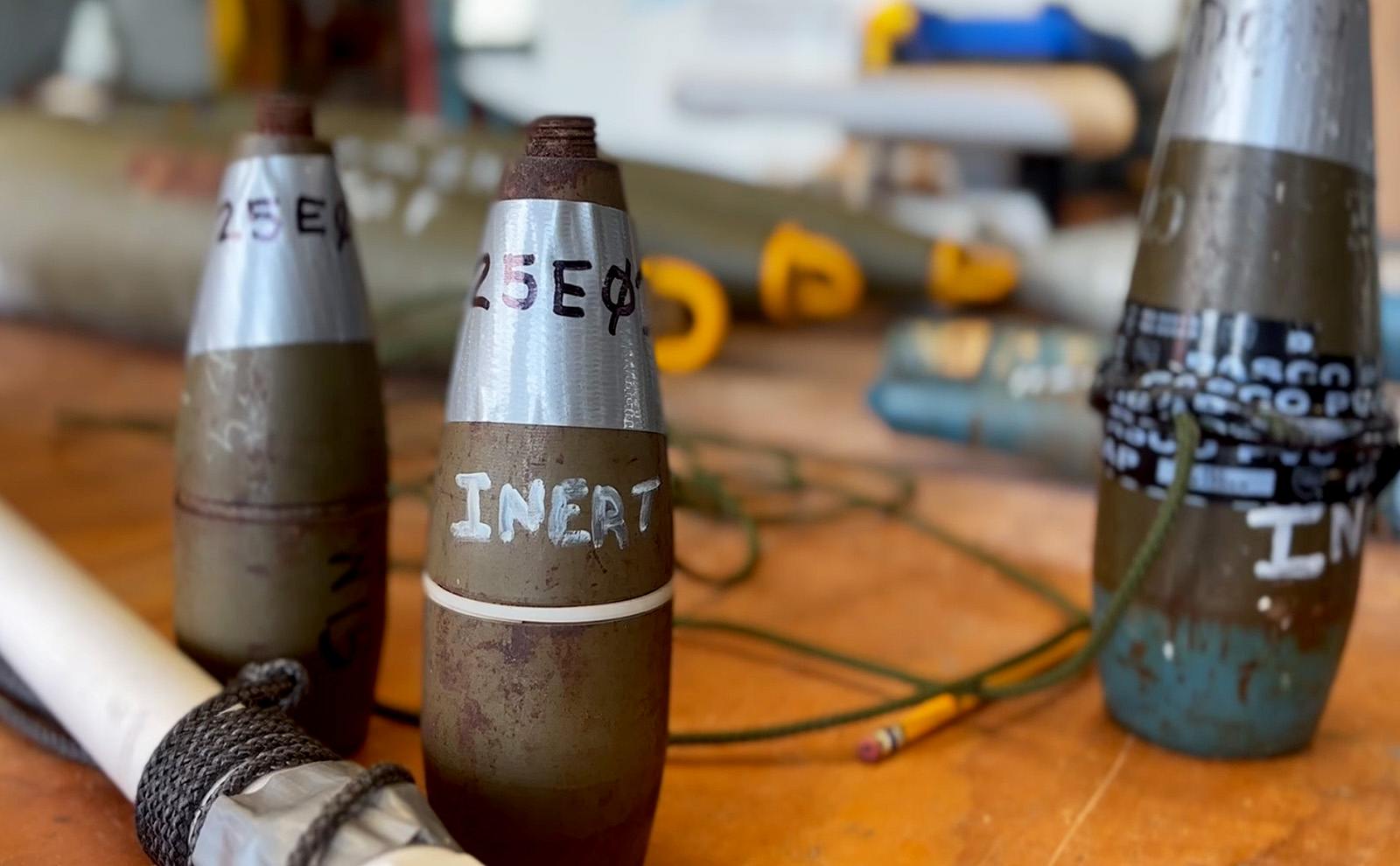
Across the country, coastal waters at Formerly Used Defense Sites (FUDS) potentially contain unexploded ordnance. Finding, identifying, characterizing and, when necessary, safely clearing these munitions in shallow-water environments presents an immense challenge.
Cutting-edge robotic systems equipped with advanced sensors, acoustics and precision mapping tools hold potential to locate these hazards. However, these technologies must first be proven in the chaotic, highly dynamic environment of the nearshore zone.
An ERDC research team at the Field Research Facility (FRF) in Duck, North Carolina, part of ERDC’s Coastal and Hydraulics Laboratory, is bridging this critical gap.
By establishing an extensive underwater testbed, ERDC is providing the real-world environment needed to test, validate and advance next-generation sensors and robotic platforms in surf conditions — ensuring these technologies are mission-ready.
Joining us to discuss this testbed are Dr. Spicer Bak and Pat Dickhudt, who have been at the forefront of the design and development of this testbed that is helping accelerate the delivery of these important technologies.
Discussion topics include the U.S. Army Corps of Engineers’ involvement in underwater munitions response (2:10), what makes the FRF a perfect location for this testbed (5:15), and how the FRF’s unique capabilities support a high level of accuracy (18:31). We also talk about lessons learned from developing the testbed (19:50), the process of using the testbed (28:09) and some of the key findings from technologies tested at the site (33:24).
Listen to the audio podcast at PowerofERDCPodcast.org/74-underwater-UXO-testbed.

Recent Comments