Civil Works

#40: Engineering at the water’s edge: Advancing capabilities through modeling, autonomy and industry partnerships

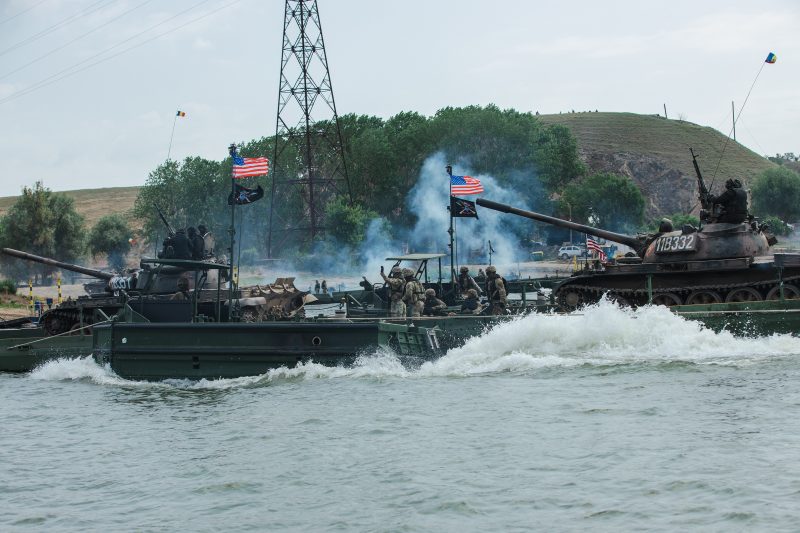
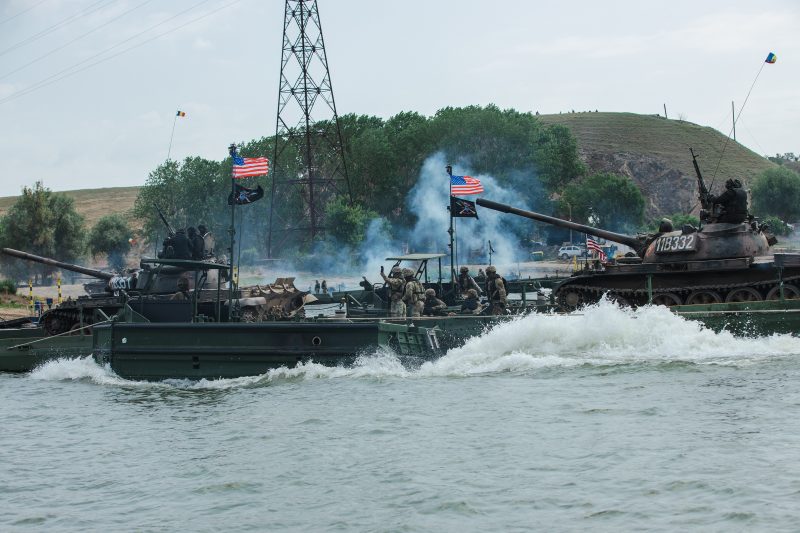
Dr. Gaurav Savant, Senior Scientific Technical Manager at the ERD Coastal and Hydraulics Laboratory, discusses how ERDC is transforming military and civil operations through advanced modeling, AI and autonomous systems. From ensuring safe wet gap crossings for Warfighters to revolutionizing water resource management, these innovations are reshaping the future of defense and engineering. Topics include…

Read More

Podcast Resources: #40: Engineering at Water’s Edge

Explore the key projects discussed in this episode, including ERDC’s advancements in computational fluid dynamics and its contributions to improving military logistics and coastal operations. MORE INFORMATION: Savant Selected as Fulbright Specialist  Autonomous Barge Kits Improve Logistical Capabilities for Joint Forces  Ship and Watercraft Simulation Facility Coverage Enhanced Training and Simulation for Wet Gap Crossings …

Read More

Video: #40: Engineering at the Water’s Edge

https://www.youtube.com/watch?v=3rVW0vIHnqI Dr. Gaurav Savant, Senior Scientific Technical Manager at the ERDC Coastal and Hydraulics Laboratory, discusses how ERDC is transforming military and civil operations through advanced modeling, AI and autonomous systems. From ensuring safe wet gap crossings for Warfighters to revolutionizing water resource management, these innovations are reshaping the future of defense and engineering. Topics…

Read More

#40: Engineering at the water’s edge: Advancing capabilities through modeling, autonomy and industry partnerships

Dr. Gaurav Savant, Senior Scientific Technical Manager at the ERDC Coastal and Hydraulics Laboratory, discusses how ERDC is transforming military and civil operations through advanced modeling, AI and autonomous systems. From ensuring safe wet gap crossings for Warfighters to revolutionizing water resource management, these innovations are reshaping the future of defense and engineering. Topics include…

Read More

#36: SandHound: Applying robotics to advance critical coastline survey capabilities

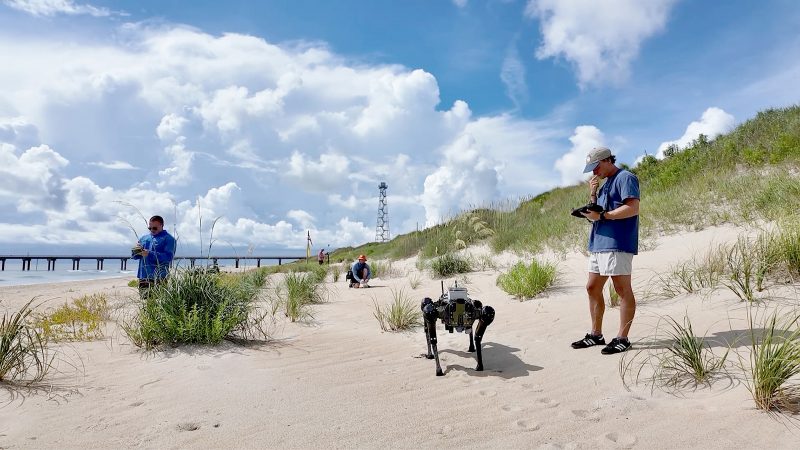
For several sweltering weeks along the North Carolina coastline, an ERDC teampushed a quadruped robot with a suite of advanced sensors to its limit to test its abilityto conduct critical beach landscape surveys. The research – known as the SandHound Project – is working to validate whether thequadruped can operate at all levels of the…

Read More

#31: Wellbot: An innovative system to maintain relief wells

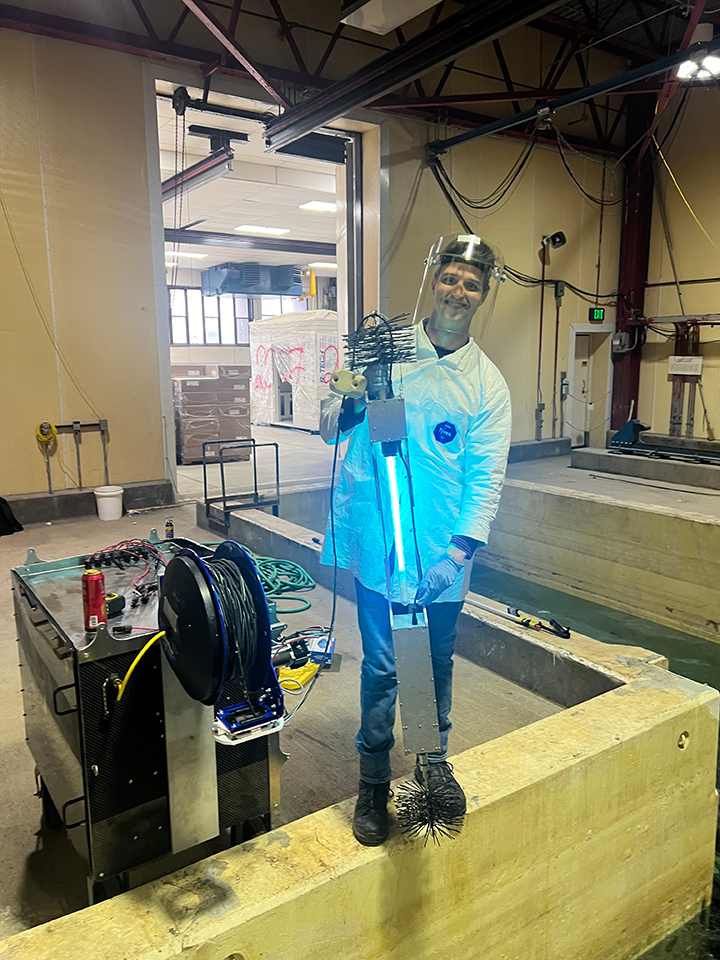
The nation’s levees and dams depend upon relief wells to alleviate underground pressure when water levels are high. However, microorganisms and natural chemicals in the water gradually leave a residue that clogs the wells’ porous screen walls, reducing their practical value and increasing the risk of dam or levee failure. Existing maintenance methods are costly,…

Read More

#31: Wellbot: An innovative system to maintain relief wells

The nation’s levees and dams depend upon relief wells to alleviate underground pressure when water levels are high. However, microorganisms and natural chemicals in the water gradually leave a residue that clogs the wells’ porous screen walls, reducing their practical value and increasing the risk of dam or levee failure. Existing maintenance methods are costly,…

Read More

#30: Oil on Ice: Improving spill response in frigid regions

The environmental and economic toll of large-scale oil spills, such as the Exxon Valdez and Deepwater Horizon incidents, can linger for decades. That’s why research into better techniques and technologies for rapidly responding to these disasters is critical. One aspect of oil spill response that requires particular attention is the effect of ice and frigid…

Read More

#30: Oil on Ice: Improving spill response in frigid regions

The environmental and economic toll of large-scale oil spills, such as the Exxon Valdez and Deepwater Horizon incidents, can linger for decades. That’s why research into better techniques and technologies for rapidly responding to these disasters is critical. One aspect of oil spill response that requires particular attention is the effect of ice and frigid…

Read More

#29: Underkeel Clearance: Quantifying demand for USACE dredging

The ships calling upon U.S. ports have grown larger, and navigation channels must be dredged to greater depths to handle them. However, dredging is expensive, and the U.S. Army Corps of Engineers (USACE) needs more data-driven tools to prioritize limited resources more efficiently. Responding to this need, ERDC developed Underkeel Clearance. Applying newly available ship…

Read More