infrastructure

#49: Coastal Physical Modeling: Validating for Resilience and Defense

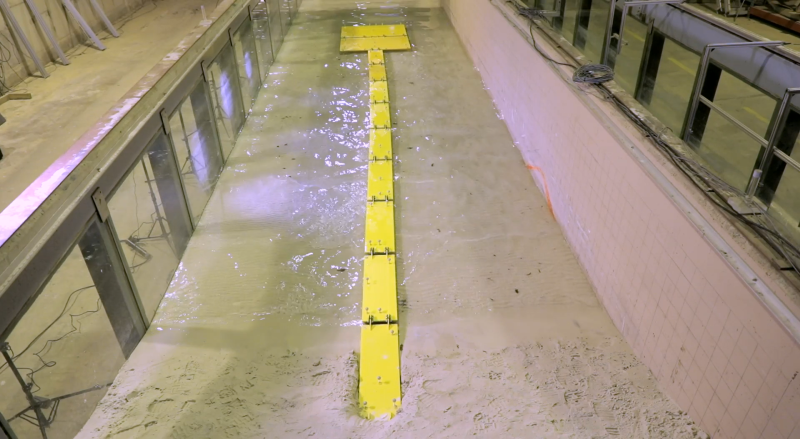
Even in the age of supercomputing, engineers still demand tangible models to fully understand the complex interaction between coastal infrastructure and dynamic ocean forces. ERDC has nearly a century of expertise in building scaled representations of real-world systems and testing them to evaluate civil works and military project designs. We discuss ERDC’s coastal physical modeling…

Read More

Video: #49: Coastal Physical Modeling

https://www.youtube.com/watch?v=lpRz4Nsuwow Even in the age of supercomputing, engineers still demand tangible models to fully understand the complex interaction between coastal infrastructure and dynamic ocean forces. ERDC has nearly a century of expertise in building scaled representations of real-world systems and testing them to evaluate civil works and military project designs. We discuss ERDC’s coastal physical…

Read More

Podcast Resources: #49: Coastal Physical Modeling 

ERDC has nearly a century of expertise in building coastal physical models and testing them to evaluate civil and military project designs. Listen to Episode 49 to hear Dr. Duncan Bryant discuss ERDC’s physical modeling capabilities and the impact they have for the nation and the Warfighter. You can also watch a video of the…

Read More

 #49: Coastal Physical Modeling: Validating for Resilience and Defense

Even in the age of supercomputing, engineers still demand tangible models to fully understand the complex interaction between coastal infrastructure and dynamic ocean forces. ERDC has nearly a century of expertise in building scaled representations of real-world systems and testing them to evaluate civil works and military project designs. We discuss ERDC’s coastal physical modeling…

Read More

#34: Underwater ROV: Making aquatic infrastructure inspection safer, cost-effective

The U.S. Army Corps of Engineers (USACE) manages hundreds of locks and dams, which are critical components of a complex navigation system that is central to our nation’s economy and security. Inspecting this aging aquatic infrastructure often requires costly and dangerous processes, such as deploying divers or dewatering structures, halting the flow of goods and…

Read More

#34: Underwater ROV: Making aquatic infrastructure inspection safer, cost-effective

The U.S. Army Corps of Engineers (USACE) manages hundreds of locks and dams, which are critical components of a complex navigation system that is central to our nation’s economy and security. Inspecting this aging aquatic infrastructure often requires costly and dangerous processes, such as deploying divers or dewatering structures, halting the flow of goods and…

Read More

Video: #34: Underwater ROV

The U.S. Army Corps of Engineers (USACE) manages hundreds of locks and dams, which are critical components of a complex navigation system that is central to our nation’s economy and security. Inspecting this aging aquatic infrastructure often requires costly and dangerous processes, such as deploying divers or dewatering structures, halting the flow of goods and…

Read More

#28: Advanced manufacturing: Using 3D printing, new materials and optimized designs to produce large-scale components

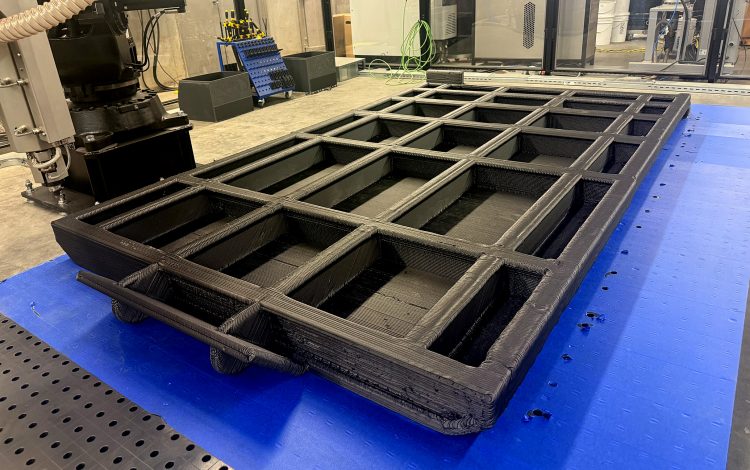
As America’s civil works infrastructure facilities age beyond their initial design lives, so do the thousands of individual components that keep them functioning. These original components were often fabricated using vintage material and manufacturing methods, making them costly, burdensome and time-consuming to replicate. However, if one of these parts were to suddenly break, that failure…

Read More

#28: Advanced manufacturing: Using 3D printing, new materials and optimized designs to produce large-scale components

As America’s civil works infrastructure facilities age beyond their initial design lives, so do the thousands of individual components that keep them functioning. These original components were often fabricated using vintage material and manufacturing methods, making them costly, burdensome and time-consuming to replicate. However, if one of these parts were to suddenly break, that failure…

Read More

#22: Using Augmented and Virtual Reality to Enable Next-Generation Engineering

We talk with Jeremy Herring and Kelly Ervin from ERDC’s Information Technology Laboratory about how ERDC is enabling next-generation engineering by applying augmented reality and virtual reality capabilities. These disruptive technologies can help solve a diverse range of current and future problems by immersing users in virtual scenes. As uses continue to grow, ERDC established…

Read More