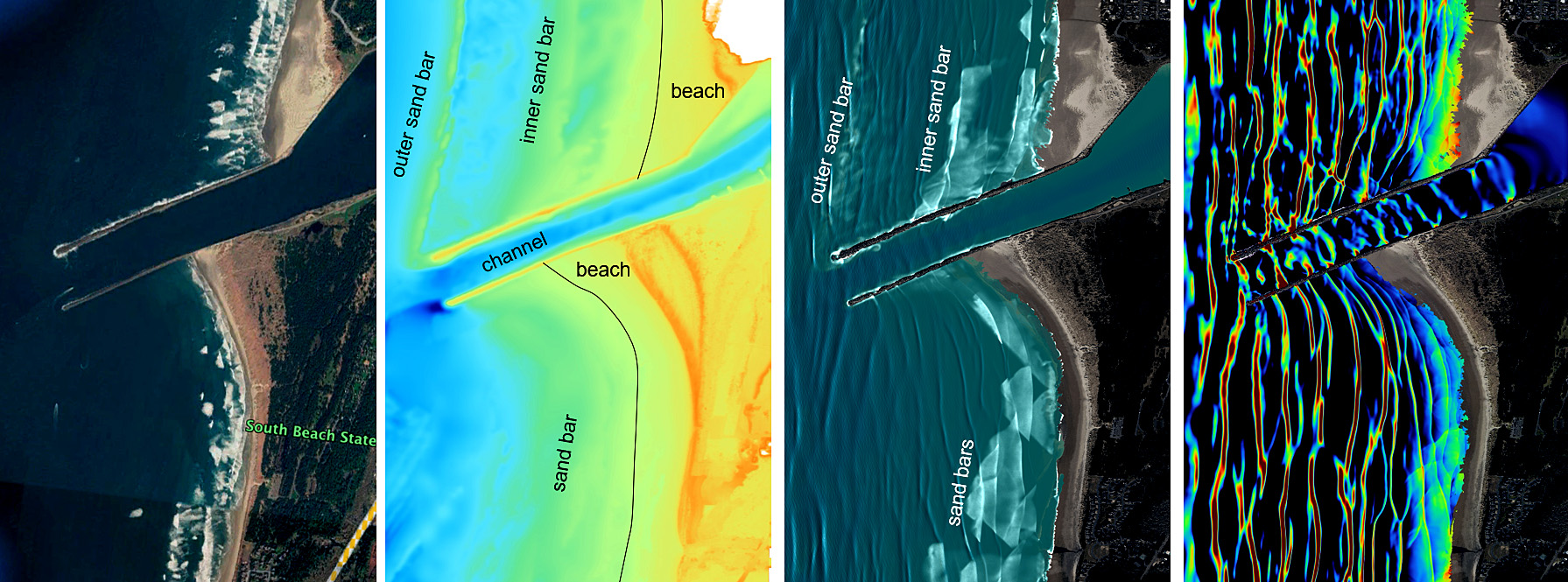
Sitting on the beach and watching the waves is something many of us envision as a dream vacation. But for a group of Marines and Sailors, observing and counting those waves — while estimating the speed and direction of the currents — is a critical mission. It is a manual, time-consuming process that carries inherent risks and operational dangers.
These observations, which are part of the Surf Observation process (SUROB), are a critical component in planning and executing amphibious operations, whether for training or active combat missions.
ERDC, in collaboration with the U.S. Navy and U.S. Marine Corps, is working to revolutionize this process and quickly deliver new techniques and technologies to Marines.
On this episode, we are joined by Crystal Painter, a research physical scientist with ERDC’s Coastal and Hydraulics Laboratory and a member of the team researching new techniques and technologies to make SUROBs faster, safer and more accurate.
Topics include what makes the surf zone – or littoral zone – such a chaotic and dangerous area for amphibious operations (1:28), how Marines and Sailors currently conduct surf observations (7:13) and how the data collected informs decision makers on when and if to launch amphibious operations (10:48). We also discuss some of the software and hardware technologies developed and tested to make observations easier and more accurate (11:40), how the Field Research Facility is perfectly suited to test and validate new technologies (16:55), and an ERDC-wide team that continues to research new SUROB techniques and technologies (24:29).
Watch a video of this podcast at PowerofERDCPodcast.org/68-Surf-Observation_video.
Podcast: Play in new window | Download
Recent Comments